
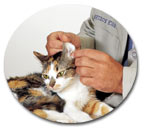

Cleaning And First Aid For Your Your Cat's Ears:
Clean your cat's ears routinely, at least once a week. Cleaning the ears is a relatively easy task provided that you take a few simple precautions. You may require an assistant to hold the cat for you, and you should use cotton-tipped swabs dipped in baby oil - never use alcohol or any other solvent.
The ear canal is "L" shaped, going straight down and then turning in toward the head; at the end of the "L" is the eardrum. To clean the ear, hold the ear flap (or pinna) straight up above the head and gently place the cotton tipped swab into the canal in a vertical position; that is, facing down toward the floor. This way the swab cannot enter far enough into the canal to harm the eardrum.
Using a very gentle motion, clean out the wax and debris from the ear folds and crevices. If there's heavy brown debris in the ears, or if the cat scratches at the ears or tilts his head persistantly to one side, call your veterinarian.
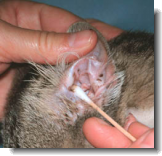
First Aid For Common Ear Conditions In Your Cat:
Hematoma
(Blood Blister):
(Blood Blister):
A hot, soft, fluctuating swelling to the ear flap occurs when a blood vessel breaks and blood accumulates between the skin and the cartilage of your cat's ear. The hematoma is drained and stitched to prevent the ear from refilling with blood. Corticosteroids may also be used.
Frostbite:
The tips of your cat's ears are most at risk of frostbite. If your cat has been exposed to prolonged cold, dab the ears with lukewarm water. Do not rub them - that will only make them itchier.
Sunburn:
Cats with white coats are most prone to sunburn, especially in sunny regions. They are also susceptible to skin cancer on their ear tips. Apply a sunblock of SPF 30 or more before letting your cat out in direct sunlight for prolonged periods.
You may also find this page useful: Ear disorders in cats: Deafness, Ear Mites, Tumors, Infections, and Treatments.

Pet Meds: Dogs | Pet Meds: Cats | Dog Health : By Breed | Cat Health : By Breed | Dog Grooming | Cat Grooming | Pet Top 10's | Pet Food Recipes

Pet Meds: Dogs Pet Meds: Cats Common Dog Health Issues Common Cat Health Issues Dog Grooming Cat Grooming Pet Top 10's
Pet Health:Home
Copyright 2006-2011 PetMedsOnline.Org
You can now order cat grooming supplies in our online pet store.