
Signs of Roundworms In Cats
Kittens infected with roundworm are often thin and suffer from diarrhea. They sometimes look pot bellied. Often the most obvious sign is presence of the worms in the kitten's stool or vomit.
Treatment For Roundworm In Cats
Many over the counter products are available, including Drontal and Drontal Plus, Heartgard Plus, Panacur, and Revolution. Sometimes two and even three treatments may be necessary to completely solve the problem.
Kittens infected with roundworm are often thin and suffer from diarrhea. They sometimes look pot bellied. Often the most obvious sign is presence of the worms in the kitten's stool or vomit.
Treatment For Roundworm In Cats
Many over the counter products are available, including Drontal and Drontal Plus, Heartgard Plus, Panacur, and Revolution. Sometimes two and even three treatments may be necessary to completely solve the problem.
Signs Of Hookworms In Cats
Cats infected with hookworm (especially kittens) tend to look very thin, and their fur is scruffy and dull. Diarrhea tinged with blood is common in both young and older cats. The vet diagnoses hookworms by microscopic examination of the stool for the parasite's eggs.
Cats infected with hookworm (especially kittens) tend to look very thin, and their fur is scruffy and dull. Diarrhea tinged with blood is common in both young and older cats. The vet diagnoses hookworms by microscopic examination of the stool for the parasite's eggs.
Treatment Of Hookworm In Cats
Products available for treatment of hookworm include HomeoPet Worm Clear, Drontal Feline, and Heartgard30. More than one treatment may be necessary to eliminate the problem.
Products available for treatment of hookworm include HomeoPet Worm Clear, Drontal Feline, and Heartgard30. More than one treatment may be necessary to eliminate the problem.
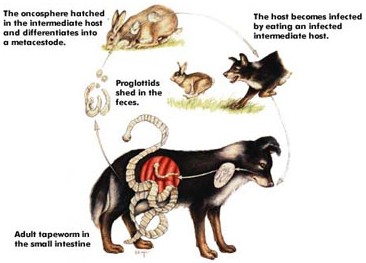
Tapeworms: Tapeworms are flat and actually got their name from their shape, and their resemblance to pieces of tape. It is possible to see them moving in the cat's stool after it has passed. Tapeworm infections occur when the cat eats an infected intermediate host - usually the flea (If a cat happens to have fleas, it may accidentally swallow one when grooming itself). Mice, rabbits and fish can also act as hosts for the tapeworm, and a cat that eats raw meat from any of these hosts can become infected.
Signs Of Tapeworm In Cats
Tapeworms seldom cause much real trouble beyond mild diarrhea and some rectal itching. You're most likely to spot them by examining the hair around the rectum for the rice-like segments that contain the tapeworm eggs, but because cats clean themselves so thoroughly, this is not always possible.
Tapeworms seldom cause much real trouble beyond mild diarrhea and some rectal itching. You're most likely to spot them by examining the hair around the rectum for the rice-like segments that contain the tapeworm eggs, but because cats clean themselves so thoroughly, this is not always possible.
Treatment Of Tapeworm In Cats
As with so many parasite problems, treating tapeworms is a two part task - you have to rid the cat of tapeworms and rid the environment of the intermediate host, most likely fleas. So, once you get rid of the tapeworms, be sure to get rid of the fleas! See the section on fleas for more information. Products available for the treatment of tapeworm include Tape Worm Tabs-Cat (praziquantel), Drontal Feline, Droncit, and Cestex (epsiprantel).
As with so many parasite problems, treating tapeworms is a two part task - you have to rid the cat of tapeworms and rid the environment of the intermediate host, most likely fleas. So, once you get rid of the tapeworms, be sure to get rid of the fleas! See the section on fleas for more information. Products available for the treatment of tapeworm include Tape Worm Tabs-Cat (praziquantel), Drontal Feline, Droncit, and Cestex (epsiprantel).
IMPORTANT!
Don't try to solve a worm or flea problem by yourself with "over the counter" medication, as many of these medications have caused fatalities in cats. Do your research first and ALWAYS consult your vet for his/her recommendations!
Don't try to solve a worm or flea problem by yourself with "over the counter" medication, as many of these medications have caused fatalities in cats. Do your research first and ALWAYS consult your vet for his/her recommendations!
Roundworms
Roundworms are long, white worms that look like spaghetti, and they are easy to recognize in the cat's stool or vomit. It's probably safe to assume that most kittens will contract roundworms from their mother, but older cats usually become resistant to them. Under normal sanitary conditions these parasites are not such a serious problem as other, faster-developing parasites.
Roundworms are long, white worms that look like spaghetti, and they are easy to recognize in the cat's stool or vomit. It's probably safe to assume that most kittens will contract roundworms from their mother, but older cats usually become resistant to them. Under normal sanitary conditions these parasites are not such a serious problem as other, faster-developing parasites.
Internal Parasites In Cats: Roundworm, Hookworms, Tapeworms And Heartworm
Signs Of Heartworm In Cats
Severe infection by adult heartworms can cause coughing, breathing difficulties, fatigue, and general weakness. As the disease progresses the cat's heart, liver, and lungs become severely damaged. Visible symptoms of the disease do not usually appear until the advanced stages, by which time the disease may be irreversible. Diagnosis of heartworm disease is based on the cat's history, clinical signs, chest x-rays, and blood tests to locate the presence of the parasite.
Severe infection by adult heartworms can cause coughing, breathing difficulties, fatigue, and general weakness. As the disease progresses the cat's heart, liver, and lungs become severely damaged. Visible symptoms of the disease do not usually appear until the advanced stages, by which time the disease may be irreversible. Diagnosis of heartworm disease is based on the cat's history, clinical signs, chest x-rays, and blood tests to locate the presence of the parasite.
Treatment Of Heartworm In Cats
Heartworm in cats is generally more rare in cats than in dogs, primarily because cats spend a lot more time indoors, with less exposure to mosquitos. However, the disease in cats is very difficult to treat, and about 70% of cats will die from the disease once any obvious symptoms are present. Your best course of action is prevention using once a month Heartguard for cats, or Revolution.
Heartworm in cats is generally more rare in cats than in dogs, primarily because cats spend a lot more time indoors, with less exposure to mosquitos. However, the disease in cats is very difficult to treat, and about 70% of cats will die from the disease once any obvious symptoms are present. Your best course of action is prevention using once a month Heartguard for cats, or Revolution.

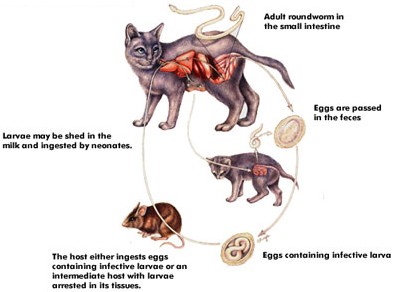
Roundworms: The most common method of infection is through the uterus of the mother cat. Scientists have learned that the dormant, microscopic larvae present in the mother become active when she's about 42 days pregnant. The larvae migrate from the mother's tissues to those of the kittens while they are still in the uterus. Another method of infection is through mother's milk.
Pet Meds: Dogs | Pet Meds: Cats | Dog Health : By Breed | Cat Health : By Breed | Dog Grooming | Cat Grooming | Pet Top 10's | Pet Food Recipes
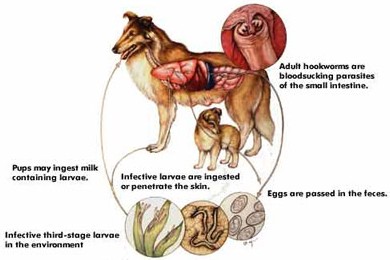
Hookworms: Hookworms are small parasites (less than half an inch long) that affect cats of all ages. The parasites live in the small intestine and attach themselves to the lining of the intestine. Hookworms are bloodsuckers, and if there are enough of them they can cause severe anemia (deficiency of red blood cells) and even death. All a cat has to do to become infected is walk on soil where the eggs or larvae are present. The larvae can penetrate the skin directly, or the eggs can enter the cat's system when he licks them off his feet and swallows them.
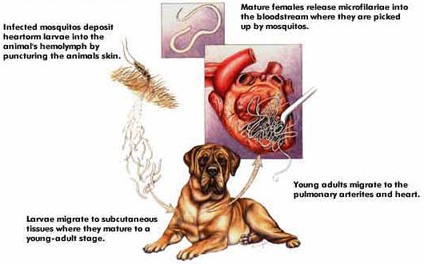
Heartworm: Heartworm in cats is caused by a worm that lives in its adult stage in the right side of the cat's heart. Heartworms are transmitted from one cat to another by mosquitos, and do all their damage in the adult stage, by which time the worms can be up to 12 inches long. Heartworm in cats is a serious matter and can be fatal.
Find And/Or Search For These Brands Here.
Find And/Or Search For These Brands Here.
Find And/Or Search For These Brands Here.
Find And/Or Search For These Brands Here.

Pet Meds: Dogs Pet Meds: Cats Common Dog Health Issues Common Cat Health Issues Dog Grooming Cat Grooming Pet Top 10's
Pet Health:Home
Copyright 2006-2011 PetMedsOnline.Org

Online Store For Cats!
Find everything from basic grooming items and tasty treats, to high tech devices designed for pets!
Find everything from basic grooming items and tasty treats, to high tech devices designed for pets!
Pet Top Lists!
From the friendliest cat breeds to the most intelligent dogs, you'll find it all on our "pet top list" pages!
From the friendliest cat breeds to the most intelligent dogs, you'll find it all on our "pet top list" pages!

