
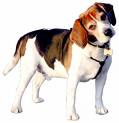

Simple Dog Obedience Training And Tricks:
Obedience Training means, for the dog, learning a new language. Use simple commands of one word each where possible, such as "heel" or "sit". This will make it easy for the dog to associate the command with the lesson he is learning. Here are some of the more important lessons which are the basics for all dog obedience training. You will need a good leather leash, a strong collar (preferably a chain training collar) and a lot of patience! All training should start with the dog at your left heel.
Dog Obedience Training Lesson #2: Sit
In a commanding voice, tell your dog to sit. At the same instant, pull back on his collar and push down on his rump. It may be necessary for you to wiggle his rump in order to get off balance so he has to sit. Hold him in position, repeating the command word "sit". Then praise him, saying "Good Dog". Move along a bit, and repeat the lesson. Do this over and over until the dog will sit on command. Do not practice the heel and sit lessons for more than 10 minutes at a time, or the dog will get bored. After a few minutes of practice give him a play period, then give him another period of training.
In a commanding voice, tell your dog to sit. At the same instant, pull back on his collar and push down on his rump. It may be necessary for you to wiggle his rump in order to get off balance so he has to sit. Hold him in position, repeating the command word "sit". Then praise him, saying "Good Dog". Move along a bit, and repeat the lesson. Do this over and over until the dog will sit on command. Do not practice the heel and sit lessons for more than 10 minutes at a time, or the dog will get bored. After a few minutes of practice give him a play period, then give him another period of training.
Dog Obedience Training Lesson #1: Heel
The purpose of this exercise is to teach the dog to walk quietly at your left side. Hold the end of the leash in your right hand and use your left to hold the leash fairly close to the dog's neck. Command him in a firm voice to "heel" and start walking forward. If the dog pulls ahead, use a wrist action to give a series of quick jerks to bring him back to heel. If he lags behind, the same short jerks will bring him forward. But you must keep repeating the command "heel" until he learns that it means he must walk at your side.
This lesson is more easily taught if you do it along a quiet street, a sidewalk or building. The idea is to give the dog knowledge of the exact distance he should keep from your heel. Thus, if you walk forward along the left curb of the street, the dog must stay close to your side. If he jumps off the curb, say "No!" and jerk him back. Walking along the sidewalk edge also helps. If the dog is between you and a building, you can space him perfectly, moving closer to head him off if he tries to get ahead.
Dogs that pull widely on the leash, choke, and lunge require patience and firmness, and perhaps special collars, but must be corrected. You might use a cane to tap the dog lightly on the nose when he gets too far ahead, or swing the cane in an arc so that, if he goes forward, the cane will bump him in the nose or face (gently, of course).
The purpose of this exercise is to teach the dog to walk quietly at your left side. Hold the end of the leash in your right hand and use your left to hold the leash fairly close to the dog's neck. Command him in a firm voice to "heel" and start walking forward. If the dog pulls ahead, use a wrist action to give a series of quick jerks to bring him back to heel. If he lags behind, the same short jerks will bring him forward. But you must keep repeating the command "heel" until he learns that it means he must walk at your side.
This lesson is more easily taught if you do it along a quiet street, a sidewalk or building. The idea is to give the dog knowledge of the exact distance he should keep from your heel. Thus, if you walk forward along the left curb of the street, the dog must stay close to your side. If he jumps off the curb, say "No!" and jerk him back. Walking along the sidewalk edge also helps. If the dog is between you and a building, you can space him perfectly, moving closer to head him off if he tries to get ahead.
Dogs that pull widely on the leash, choke, and lunge require patience and firmness, and perhaps special collars, but must be corrected. You might use a cane to tap the dog lightly on the nose when he gets too far ahead, or swing the cane in an arc so that, if he goes forward, the cane will bump him in the nose or face (gently, of course).
Dog Obedience Training Lesson #3: Lie Down
While we have titled this "lie down", the proper command is simply "Down", given in as commanding a voice as possible. You can teach this one of several ways. One is, with the dog sitting, to give the command, then shove down on his shoulders, at the same time wobbling him off balance. This works with most dogs.
The second "lie down" method is to place the leash between the sole and heel of your shoe. Give the command "down", then pull up on the leash. This pulls his neck down and forces him to go down. When you see that he is starting to go down, compliment him. Also, you can pull his legs forward until he is down.
With many dogs, you have to teach the difference between "Sit" and "Down". If the dog goes down on the sit command, say "No!" and lift him into sitting position, while giving the command to sit. Likewise, if he starts to sit or stand when you've put him down you must immediately reprove him and put him back in the down position.
Don't forget to give plenty of praise when your dog performs tricks correctly!
While we have titled this "lie down", the proper command is simply "Down", given in as commanding a voice as possible. You can teach this one of several ways. One is, with the dog sitting, to give the command, then shove down on his shoulders, at the same time wobbling him off balance. This works with most dogs.
The second "lie down" method is to place the leash between the sole and heel of your shoe. Give the command "down", then pull up on the leash. This pulls his neck down and forces him to go down. When you see that he is starting to go down, compliment him. Also, you can pull his legs forward until he is down.
With many dogs, you have to teach the difference between "Sit" and "Down". If the dog goes down on the sit command, say "No!" and lift him into sitting position, while giving the command to sit. Likewise, if he starts to sit or stand when you've put him down you must immediately reprove him and put him back in the down position.
Don't forget to give plenty of praise when your dog performs tricks correctly!
Pet Meds: Dogs | Pet Meds: Cats | Dog Health : By Breed | Cat Health : By Breed | Dog Grooming | Cat Grooming | Pet Top 10's | Pet Food Recipes

Pet Meds: Dogs Pet Meds: Cats Common Dog Health Issues Common Cat Health Issues Dog Grooming Cat Grooming Pet Top 10's
Pet Health:Home
Copyright 2006-2011 PetMedsOnline.Org
What DON'T We Have In Our Online Store?
Not much! Browse products made for dogs and cats in our online pet store!
Not much! Browse products made for dogs and cats in our online pet store!