

Persistent Pupillary Membrane (PPM) In Dogs:
Persistent Pupillary Membrane (PPM) In Dogs: The Pupillary Membrane covers a puppy's pupil before it is born. It acts as a conduit through which blood is supplied to the developing eye. Normally, this membrane completely dissolves before the pup is born, or sometimes small strands of the membrane can still be present. These strands usually disappear by the time the pup is 4 or 5 weeks old. If the strands persist after this amount of time, the dog is diagnosed with Persistant Pulillary Membrane, or PPM.
Types Of PPM In Dogs:
Some PPM's will be attached from iris to iris, from the iris to cornea, iris to lens, or may even float freely with one end attached to the iris. Generally, PPM's that span from iris to iris cause no problems, disappearing or nearly disappearing on their own. Iris to lens PPM's can cause minor cataracts with a minor impact on the dog's vision. Iris to cornea PPM's can be more serious and may damage the inner lining of the cornea. Puppies with iris to cornea PPM's could be born blind, but they may improve as they age. Be sure to see a vet for a proper diagnosis and treatment.
What Breeds Of Dogs Are Affected By PPM's?
Many breeds of dog have been affected by PPM's, and the condition is not entirely hereditary. However, some breeds more at risk include the Mastiff, Chow Chow, Welsh Corgis, Basenji, Australian Shepherd, and/or Yorkshire Terriers.
Some PPM's will be attached from iris to iris, from the iris to cornea, iris to lens, or may even float freely with one end attached to the iris. Generally, PPM's that span from iris to iris cause no problems, disappearing or nearly disappearing on their own. Iris to lens PPM's can cause minor cataracts with a minor impact on the dog's vision. Iris to cornea PPM's can be more serious and may damage the inner lining of the cornea. Puppies with iris to cornea PPM's could be born blind, but they may improve as they age. Be sure to see a vet for a proper diagnosis and treatment.
What Breeds Of Dogs Are Affected By PPM's?
Many breeds of dog have been affected by PPM's, and the condition is not entirely hereditary. However, some breeds more at risk include the Mastiff, Chow Chow, Welsh Corgis, Basenji, Australian Shepherd, and/or Yorkshire Terriers.
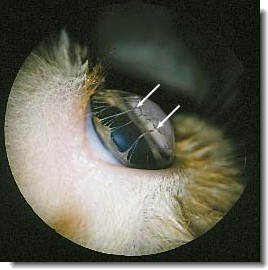
Pupillary Membrane Strands
Above: Pupillary Membrane Strands In An 8 Week-Old Puppy.
Pet Meds: Dogs | Pet Meds: Cats | Dog Health : By Breed | Cat Health : By Breed | Dog Grooming | Cat Grooming | Pet Top 10's | Pet Food Recipes

Pet Meds: Dogs Pet Meds: Cats Common Dog Health Issues Common Cat Health Issues Dog Grooming Cat Grooming Pet Top 10's
Pet Health:Home
Copyright 2006-2011 PetMedsOnline.Org

Online Store For Dogs!
Find everything from basic grooming items and tasty treats, to high tech devices designed for pets!
Find everything from basic grooming items and tasty treats, to high tech devices designed for pets!
Pet Top Lists!
From the friendliest cat breeds to the most intelligent dogs, you'll find it all on our "pet top list" pages!
From the friendliest cat breeds to the most intelligent dogs, you'll find it all on our "pet top list" pages!
