

Pulmonic Stenosis In Dogs:
With normal circulation of blood in dogs, the heart pumps blood to the lungs to be oxygenated. This blood then returns to the heart, and is distributed to the parts of the body where it is needed. The pulmonary artery is essential to this process, as it carries the blood to the lungs. Sometimes, the pulmonary artery can be partially obstructed, usually caused by a malformed pulmonic valve. This obstruction means that your dog's heart needs to work harder to pump blood to the lungs. The seriousness of the condition is determined by the degree of narrowing of the valve. Your dog could potentially develop congestive heart failure in serious cases.
Breeds Affected By Pulmonic Stenosis:
Pulmonic Stenosis is the most common heart ailment in dogs. The breeds most affected are the Mastiff, English Bulldog, Beagle, Scottish Terrier, Airedale Terrier, Cocker Spaniel, Boykin Spaniel, Samoyed, Miniature Schauzer, Wire Haired Fox Terrier, and West Highland White Terrier.
Is This A Life Threatening Disorder?
Many dogs only suffer from a mild case of pulmonic stenosis, where there is only a slight thickening of the pulmonary valve. In these cases, your dog will not be affected. Other dogs may have a larger obstruction, meaning the heart has to work harder, causing gradual heart damage that gets worse as the dog ages. In serious cases, your dog will tend to tire out quickly, have respiratory problems, and/or have abdominal swelling that can lead to death. Only your vet can diagnose the seriousness and cause of the issue using chest x-rays, an electrocardiogram, and cardiac ultrasound. In some cases, he/she may recommend surgery to solve the problem.
Pulmonic Stenosis is the most common heart ailment in dogs. The breeds most affected are the Mastiff, English Bulldog, Beagle, Scottish Terrier, Airedale Terrier, Cocker Spaniel, Boykin Spaniel, Samoyed, Miniature Schauzer, Wire Haired Fox Terrier, and West Highland White Terrier.
Is This A Life Threatening Disorder?
Many dogs only suffer from a mild case of pulmonic stenosis, where there is only a slight thickening of the pulmonary valve. In these cases, your dog will not be affected. Other dogs may have a larger obstruction, meaning the heart has to work harder, causing gradual heart damage that gets worse as the dog ages. In serious cases, your dog will tend to tire out quickly, have respiratory problems, and/or have abdominal swelling that can lead to death. Only your vet can diagnose the seriousness and cause of the issue using chest x-rays, an electrocardiogram, and cardiac ultrasound. In some cases, he/she may recommend surgery to solve the problem.
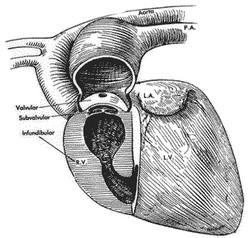
Pulmonary Artery
Above: A Typical Dog's Heart. Note The Location Of The Pulmonary Artery.
Pet Meds: Dogs | Pet Meds: Cats | Dog Health : By Breed | Cat Health : By Breed | Dog Grooming | Cat Grooming | Pet Top 10's | Pet Food Recipes

Pet Meds: Dogs Pet Meds: Cats Common Dog Health Issues Common Cat Health Issues Dog Grooming Cat Grooming Pet Top 10's
Pet Health:Home
Copyright 2006-2011 PetMedsOnline.Org

Online Store For Dogs!
Find everything from basic grooming items and tasty treats, to high tech devices designed for pets!
Find everything from basic grooming items and tasty treats, to high tech devices designed for pets!
Pet Top Lists!
From the friendliest cat breeds to the most intelligent dogs, you'll find it all on our "pet top list" pages!
From the friendliest cat breeds to the most intelligent dogs, you'll find it all on our "pet top list" pages!
